
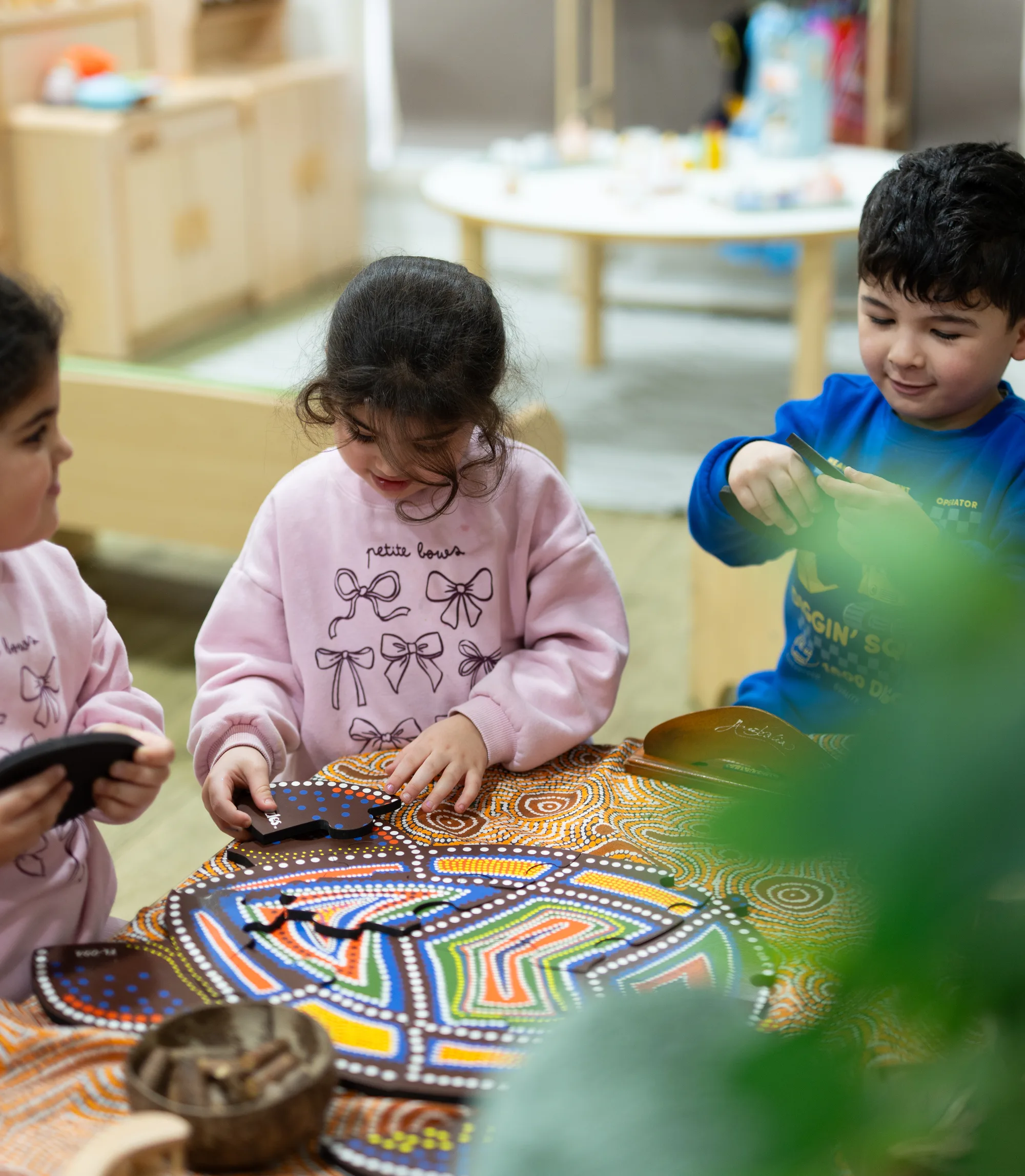
School readiness is often associated with early literacy and numeracy, but a confident transition to school includes much more.
Confidence and independence matter
Children benefit from practising everyday skills such as asking for help, managing belongings, joining group experiences and trying again after something feels difficult.
These skills help children feel capable in a new environment with new expectations.
Communication supports connection
Being able to express needs, listen to others, follow instructions and take turns helps children participate in classroom life. Early learning environments give children daily opportunities to practise these skills through play, routines and group projects.
Learning foundations still count
Early literacy, numeracy and problem-solving are important too. The difference is that young children build these foundations best through meaningful, hands-on experiences rather than pressure or worksheets.
A balanced view
Ready for school means emotionally, socially and practically ready, as well as curious about learning.