
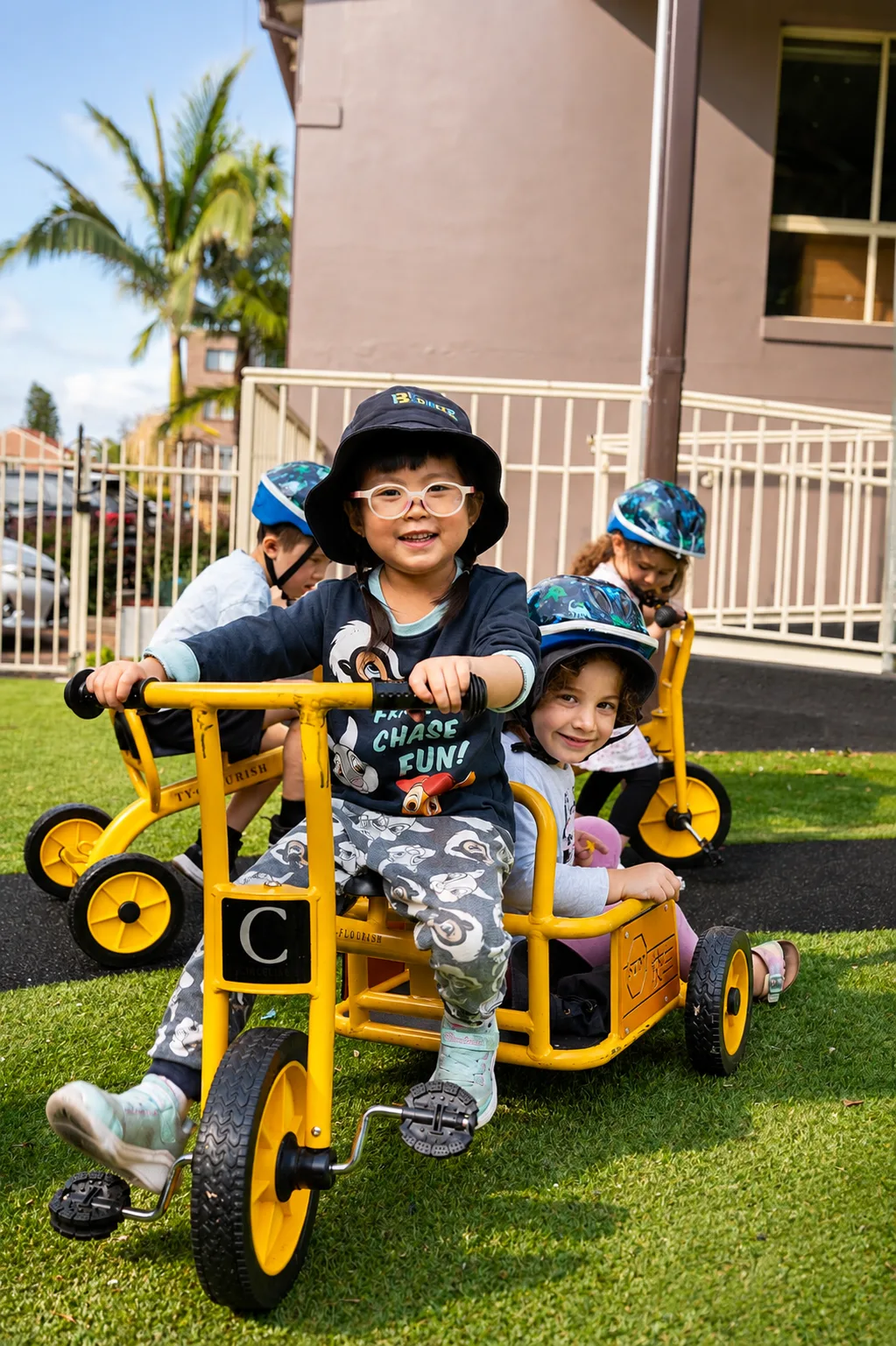
Play is not a break from learning. In early childhood, play is one of the most powerful ways children test ideas, build relationships and make sense of the world.
Children learn by doing
When children build, pretend, sort, climb, pour, paint or negotiate roles with friends, they are developing thinking skills in real time. They are testing cause and effect, practising language and building independence.
Play-based learning gives educators a window into each child's interests, strengths and next steps.
Educators extend the moment
A skilled educator notices what is happening in play and adds the right prompt, material or question at the right time. That might mean introducing new vocabulary, helping children solve a problem or encouraging them to represent an idea in a different way.
This responsive approach keeps learning meaningful because it begins with the child's curiosity.
Confidence grows through choice
When children have agency in their learning, they practise decision-making and persistence. They learn that their ideas matter and that mistakes can become part of the discovery.
For families
At home, simple open-ended materials like boxes, fabric, blocks, water and drawing tools can support rich play.